
Cost Optimization on AWS
Cloud computing provides flexibility and scalability, but without proper governance it can also introduce unnecessary operational costs. As organizations expand their workloads on AWS, cost optimization becomes an ongoing engineering responsibility rather than a one-time exercise. The goal is not simply to spend less, but to maximize the value delivered by every cloud resource.
The first step is understanding where cloud costs originate. Compute instances, storage, databases, networking, and managed services all contribute to monthly expenses. Organizations should regularly review usage patterns to identify idle resources, oversized infrastructure, and services that no longer support active workloads. Visibility is essential before meaningful optimization can begin.
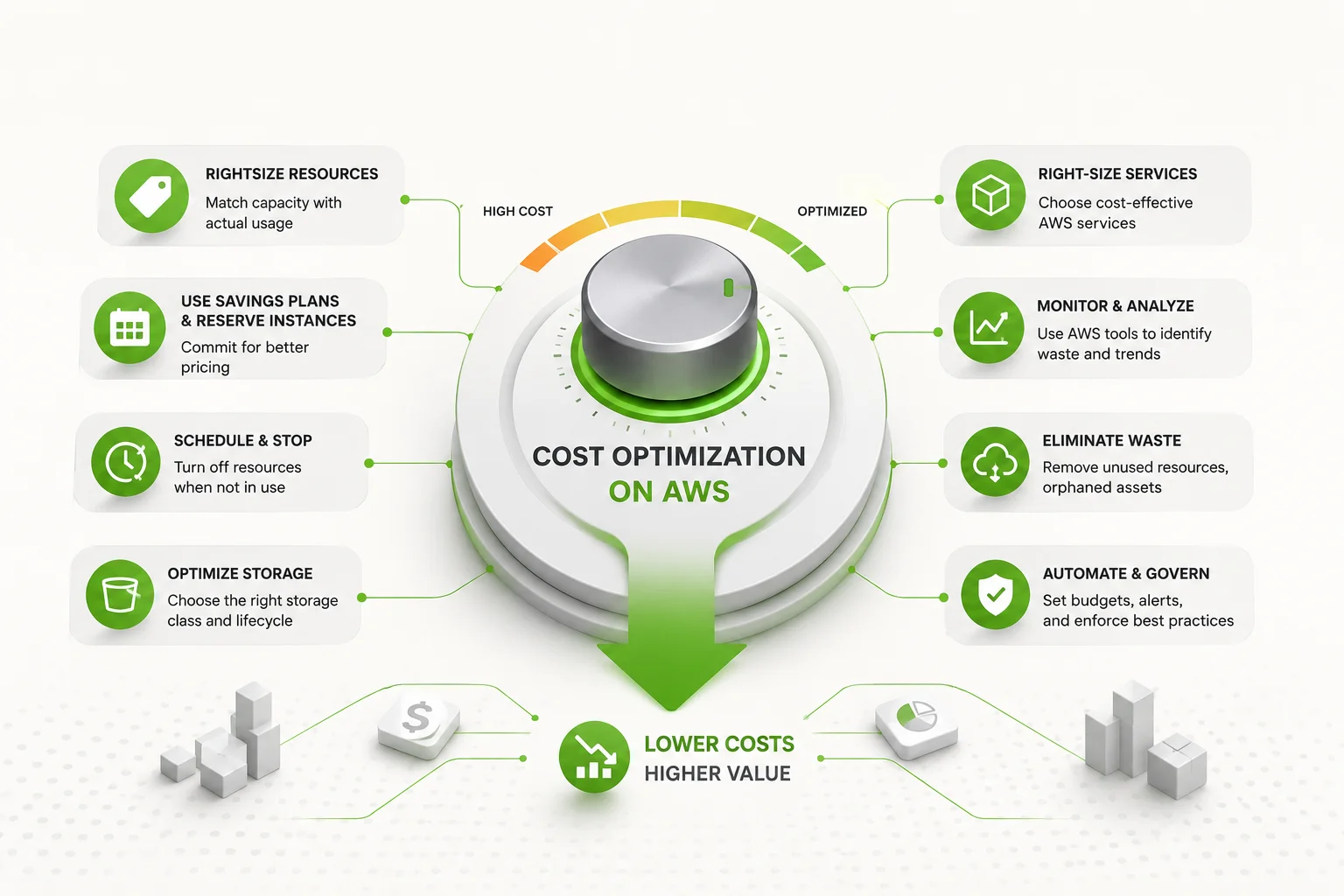
Rightsizing infrastructure often delivers immediate savings. Selecting appropriately sized virtual machines, enabling auto scaling, and using serverless services where suitable help match infrastructure capacity to actual demand. Development and testing environments can also benefit from scheduled shutdowns during non-business hours, reducing unnecessary resource consumption.
AWS provides several pricing models that reward predictable usage. Reserved Instances and Savings Plans can significantly lower long-term compute costs for stable workloads, while Spot Instances provide cost-effective capacity for fault-tolerant applications and batch processing. Choosing the right pricing strategy requires balancing flexibility with expected usage patterns.
Cost optimization should be integrated into everyday engineering practices. Infrastructure as code, automated resource tagging, budget alerts, and regular cost reviews help teams maintain financial visibility throughout the software lifecycle. Collaboration between engineering, operations, and finance teams ensures that technical decisions consider both performance and operational efficiency.
Cloud optimization is an ongoing process rather than a fixed destination. As applications evolve and business priorities change, organizations should continuously evaluate architecture, resource utilization, and cloud spending. A disciplined approach to cost management enables teams to scale confidently while maintaining long-term financial sustainability.