
ETL Design Patterns
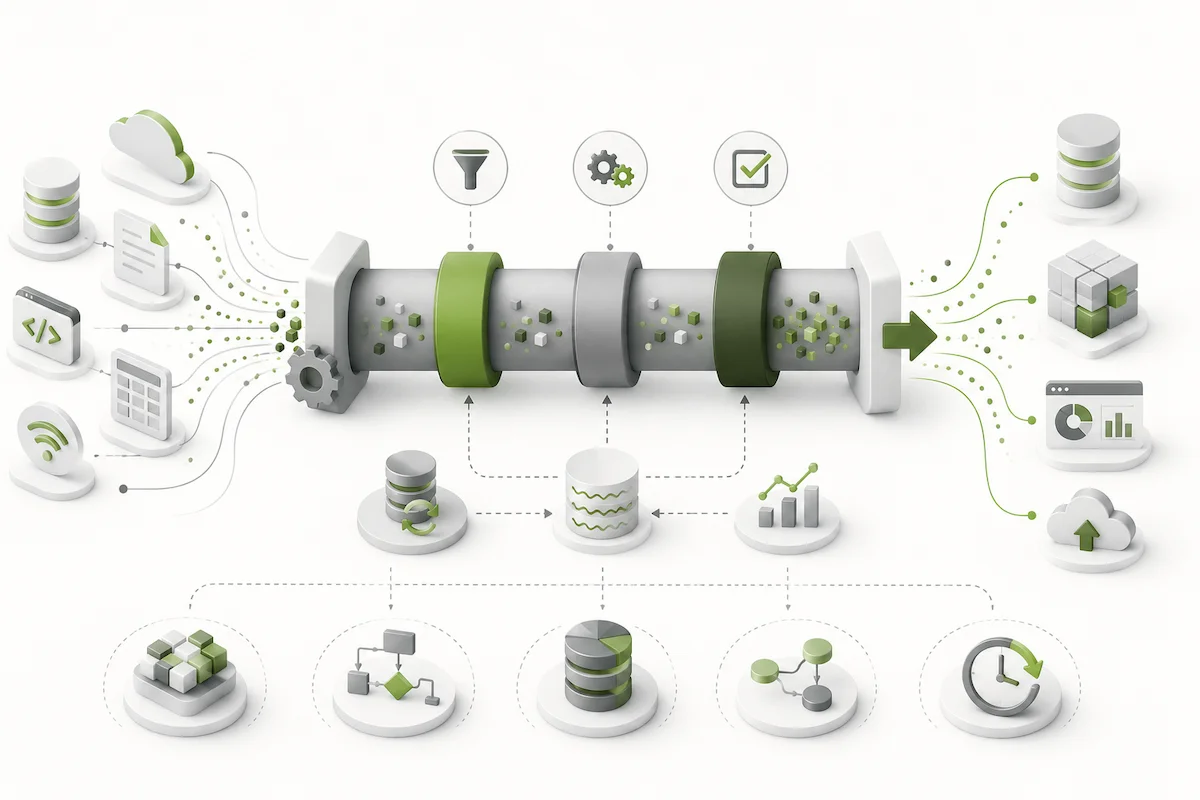
Extract, Transform, and Load (ETL) remains one of the most important foundations of modern data engineering. Reliable ETL pipelines collect information from multiple systems, transform it into consistent formats, and deliver trusted datasets for analytics, reporting, and machine learning. As organizations process larger volumes of data, thoughtful pipeline design becomes essential for both performance and maintainability.
A successful ETL process begins with reliable data extraction. Source systems may include databases, APIs, cloud services, or streaming platforms, each with different availability and performance characteristics. Incremental extraction techniques help reduce unnecessary processing by transferring only newly created or updated records rather than reprocessing entire datasets.
Transformation is where raw data becomes business-ready information. Common operations include data cleansing, validation, normalization, deduplication, and enrichment. Applying consistent business rules throughout the transformation stage ensures that downstream systems receive accurate and standardized data regardless of the original source.
Scalability and fault tolerance should be built into every ETL pipeline. Workflow orchestration, automated retries, logging, and monitoring help identify failures quickly while minimizing operational disruption. Modular pipeline design also makes it easier to maintain, test, and extend individual components as business requirements evolve.
Data quality should never be treated as an afterthought. Validation checks, schema verification, completeness testing, and anomaly detection help prevent incorrect data from reaching production analytics systems. Well-designed pipelines also provide clear audit trails that improve governance and simplify troubleshooting when issues occur.
Modern ETL is evolving alongside cloud computing and real-time analytics, but its core objective remains unchanged: delivering reliable, trustworthy data that supports informed decision-making. Organizations that invest in robust pipeline design establish a stronger foundation for analytics, AI initiatives, and long-term digital transformation.