
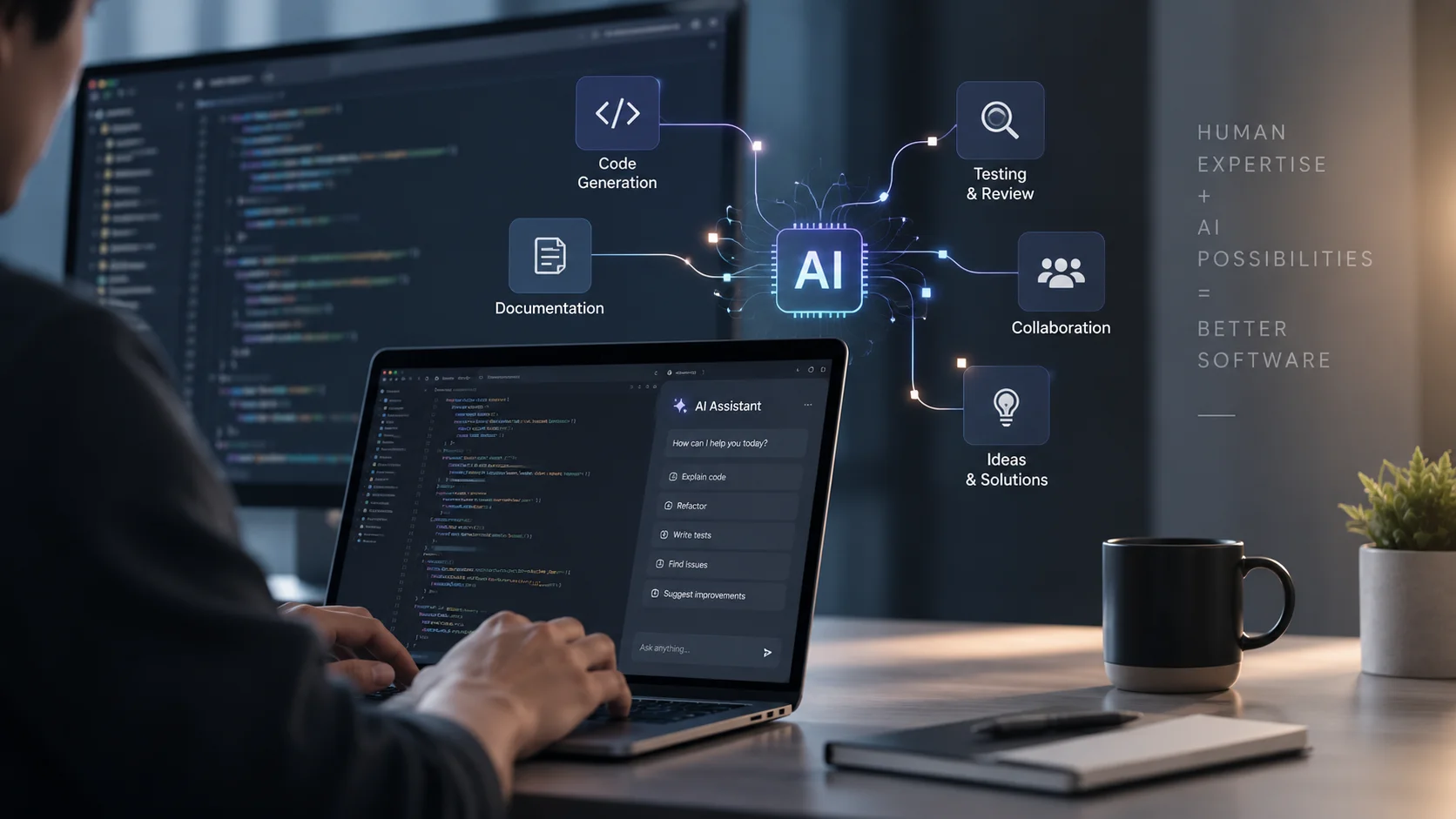
How AI Is Changing Software Engineering
Artificial intelligence is rapidly becoming part of everyday software development. Rather than replacing engineers, AI is helping teams automate repetitive work, improve productivity, and spend more time solving complex business problems. From writing code to reviewing pull requests, AI is changing how modern engineering teams build software.
One of the biggest advantages of AI is its ability to reduce routine tasks. Developers can use AI to generate boilerplate code, create unit tests, write documentation, and explain unfamiliar codebases. These capabilities allow engineers to focus on architecture, product design, and customer value instead of repetitive implementation work.
AI is also influencing the entire software development lifecycle. During planning, it can summarize requirements and identify missing acceptance criteria. During development, it assists with coding and code reviews. During testing and operations, AI helps generate test cases, analyze logs, and detect production issues faster than traditional manual approaches.
Despite these benefits, AI should never replace engineering judgment. Large language models can produce inaccurate, insecure, or outdated solutions when they lack business context. Human review remains essential to ensure software quality, maintainability, and security before changes reach production.
Successful organizations combine AI with strong engineering practices rather than treating it as a shortcut. Secure development workflows, peer reviews, automated testing, and governance remain critical. Many enterprises are also adopting private AI environments to protect sensitive code and intellectual property.
As AI continues to evolve, the role of software engineers is shifting toward architecture, problem solving, and technical leadership. Teams that embrace AI responsibly will be able to deliver software faster while maintaining the quality, security, and reliability that enterprise applications demand.