
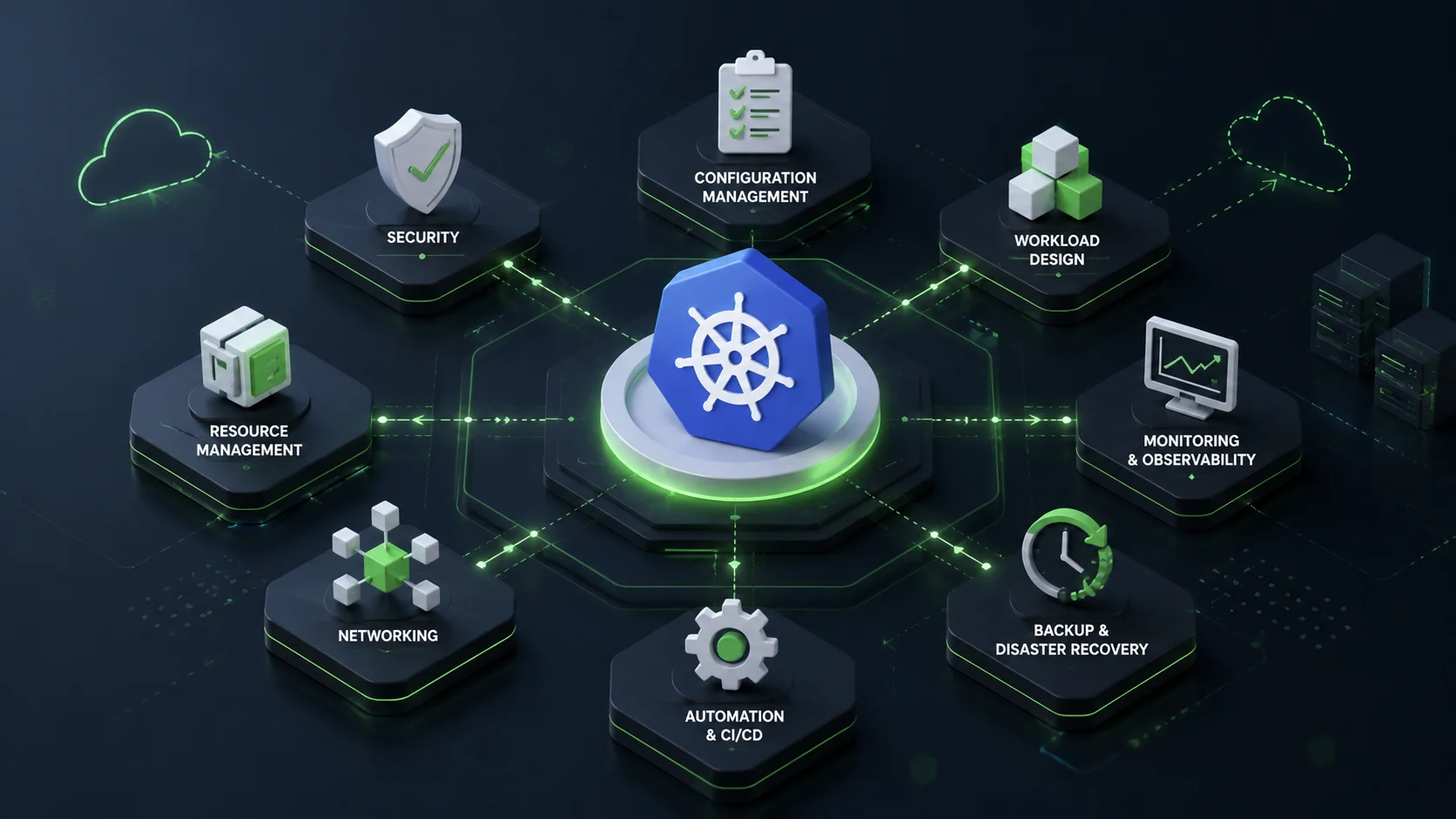
Kubernetes Best Practices
Kubernetes has become the industry standard for container orchestration, enabling organizations to deploy, scale, and manage applications across modern cloud environments. While Kubernetes provides exceptional flexibility and resilience, achieving reliable production environments requires more than simply deploying containers. Success depends on adopting operational best practices that improve security, performance, and maintainability.
A well-designed Kubernetes platform begins with a clear architecture. Applications should be containerized using lightweight, immutable images and organized into logical namespaces that separate environments, teams, or services. Resource requests and limits should be defined for every workload to prevent individual applications from consuming excessive CPU or memory and affecting cluster stability.
Automation is another key principle. Infrastructure should be managed as code, while deployments should be integrated into continuous integration and continuous delivery pipelines. Automated rollouts, health checks, and rollback strategies reduce deployment risks and help teams release new features with greater confidence. Monitoring and centralized logging are equally important for identifying issues before they affect users.
Security should be considered throughout the platform rather than added later. Organizations should apply role-based access control, manage secrets securely, regularly update container images, and scan workloads for vulnerabilities. Network policies and admission controls can further reduce risk by limiting unnecessary communication between services and enforcing deployment standards across the cluster.
As Kubernetes environments grow, observability becomes essential. Metrics, logs, and distributed tracing provide visibility into application health and system performance, making it easier to troubleshoot production issues. Regular capacity planning and cluster maintenance also ensure that infrastructure can scale efficiently as workloads evolve.
Kubernetes is a powerful platform, but it is not a complete solution on its own. Organizations that combine automation, security, observability, and disciplined operational practices can build cloud environments that are scalable, resilient, and ready to support long-term business growth.