
Product Discovery
Building successful software begins long before development starts. Product Discovery is the process of understanding business objectives, user needs, and technical opportunities before investing in implementation. By validating ideas early, organizations reduce uncertainty and improve the likelihood of delivering products that create meaningful value for customers.
A strong discovery process starts with identifying the problem rather than proposing a solution. Product teams should work closely with stakeholders and end users to understand business challenges, user behaviors, and desired outcomes. Interviews, workshops, market research, and competitive analysis all contribute to building a shared understanding of the problem being solved.
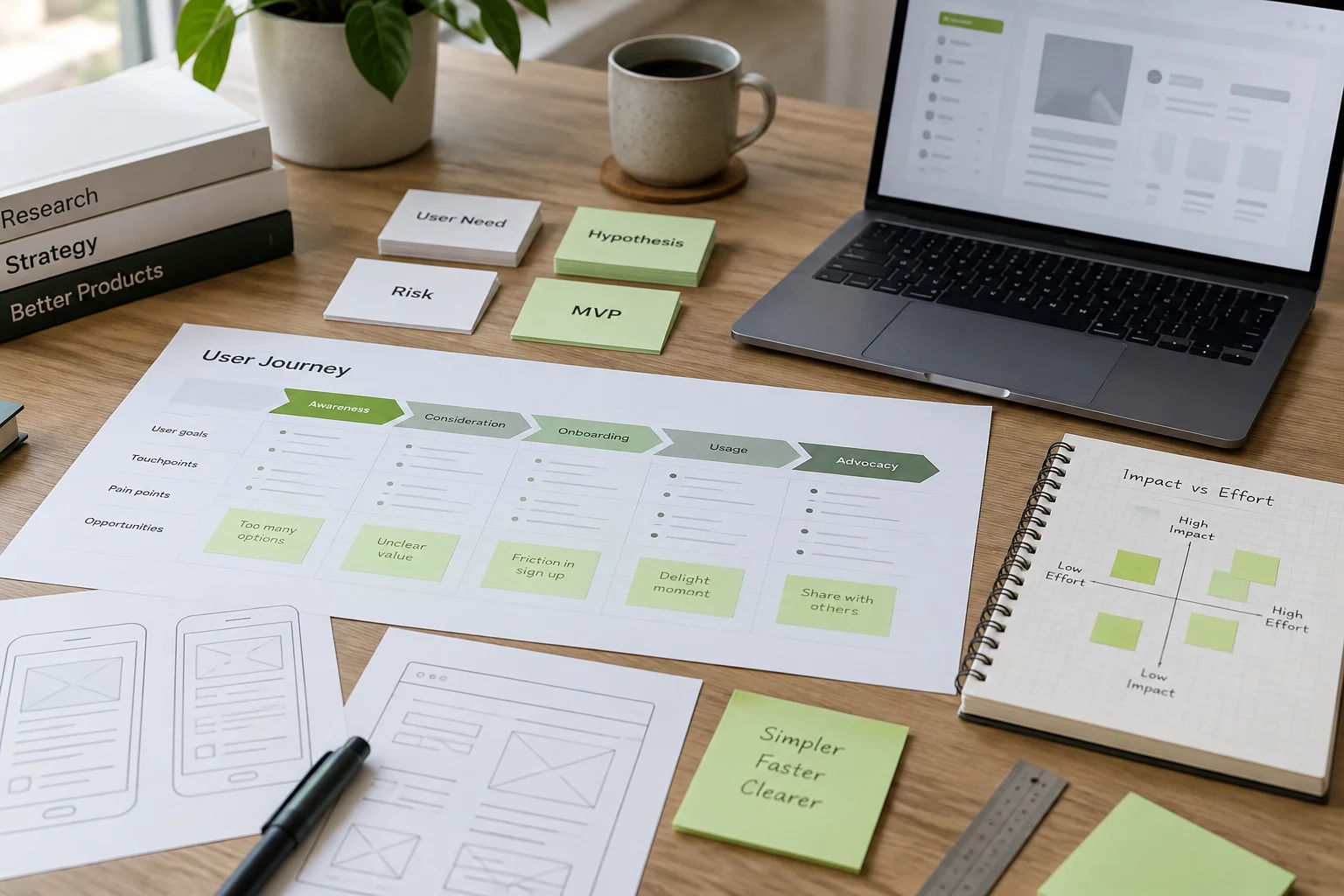
Once requirements become clearer, teams can evaluate potential solutions through prototypes, wireframes, or proof-of-concepts. Early validation allows organizations to gather feedback before committing significant engineering resources. This iterative approach helps identify usability issues, refine product direction, and avoid investing in features that deliver limited customer value.
Successful Product Discovery also requires collaboration across multiple disciplines. Product managers, designers, engineers, and business stakeholders should contribute throughout the process, balancing technical feasibility with business priorities and user expectations. Involving engineering teams early often reveals implementation opportunities or constraints that influence product decisions.
Discovery is not a one-time activity completed before development begins. Customer feedback, analytics, and market conditions continue to shape product priorities throughout the product lifecycle. Organizations that embrace continuous discovery remain better equipped to adapt as user needs and business objectives evolve.
Ultimately, Product Discovery helps teams build the right product before focusing on building the product right. By reducing uncertainty and validating assumptions early, organizations improve delivery outcomes while creating software that better serves both customers and business goals.