
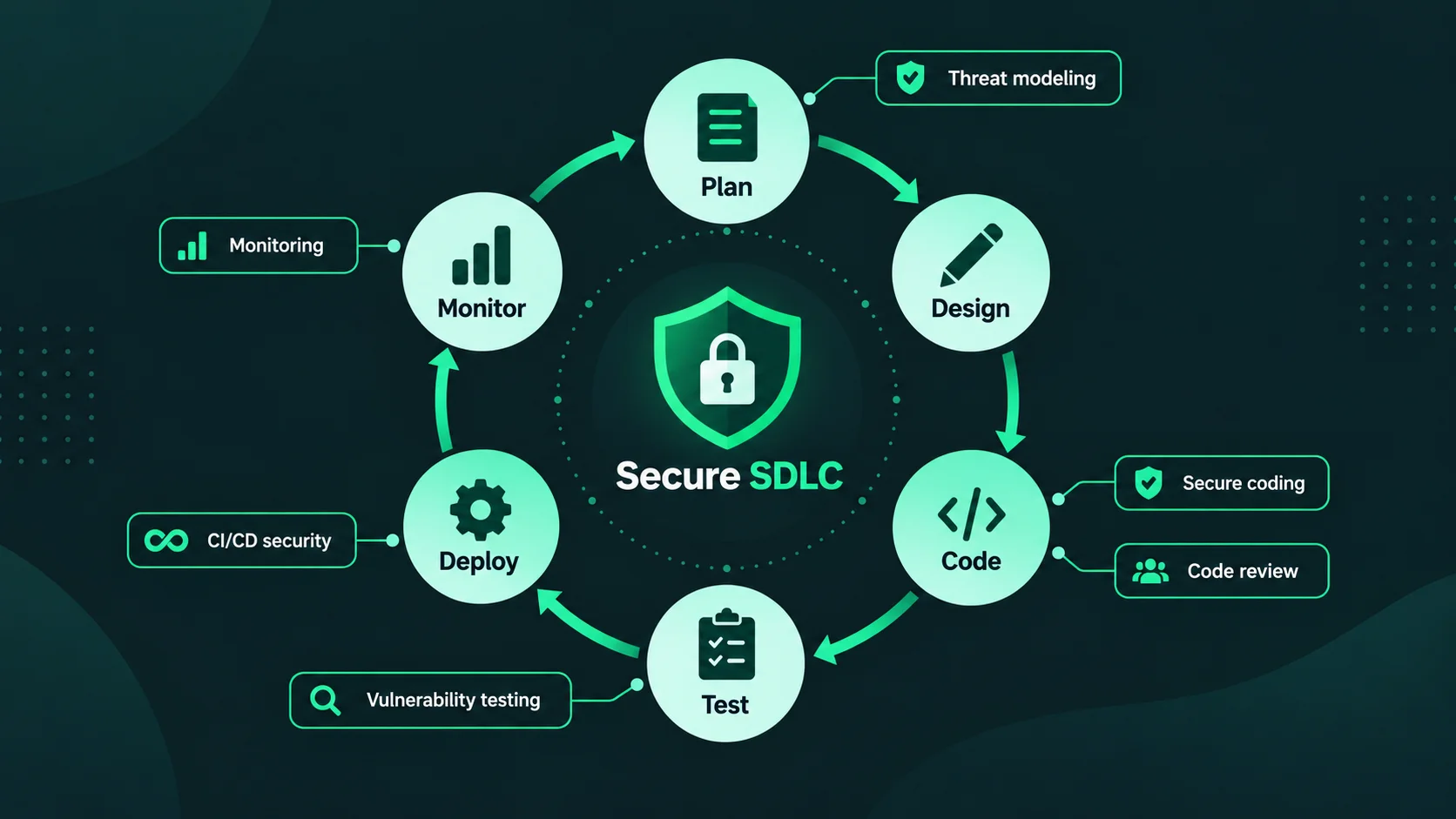
Secure SDLC
Security should not be treated as a final checkpoint before software is released. Instead, it should be integrated throughout the entire Software Development Lifecycle (SDLC), enabling teams to identify and address risks early. A Secure SDLC reduces vulnerabilities, improves software quality, and helps organizations deliver applications that are resilient by design.
The process begins during planning and requirements gathering. Security requirements should be identified alongside functional requirements, ensuring that privacy, compliance, authentication, and data protection are considered from the outset. Threat modeling can also help teams understand potential attack scenarios before development begins.
During implementation, developers should follow secure coding standards and make use of automated code analysis tools. Peer reviews, dependency scanning, and vulnerability detection help identify issues before they become production risks. Keeping third-party libraries up to date is equally important, as many security incidents originate from outdated dependencies.
Testing is another critical stage of a Secure SDLC. Automated security testing, penetration testing, and infrastructure validation should complement functional and performance testing. Integrating these activities into CI/CD pipelines allows security checks to become part of every release rather than a separate manual process.
Security does not end after deployment. Continuous monitoring, log analysis, vulnerability management, and incident response planning help organizations identify emerging threats and respond quickly when issues occur. Regular patching and infrastructure maintenance ensure that production environments remain protected as new vulnerabilities are discovered.
A Secure SDLC encourages collaboration between developers, operations teams, and security specialists. By embedding security into every phase of software delivery, organizations can reduce risk, improve compliance, and build applications that customers can trust over the long term.