
Technical Debt
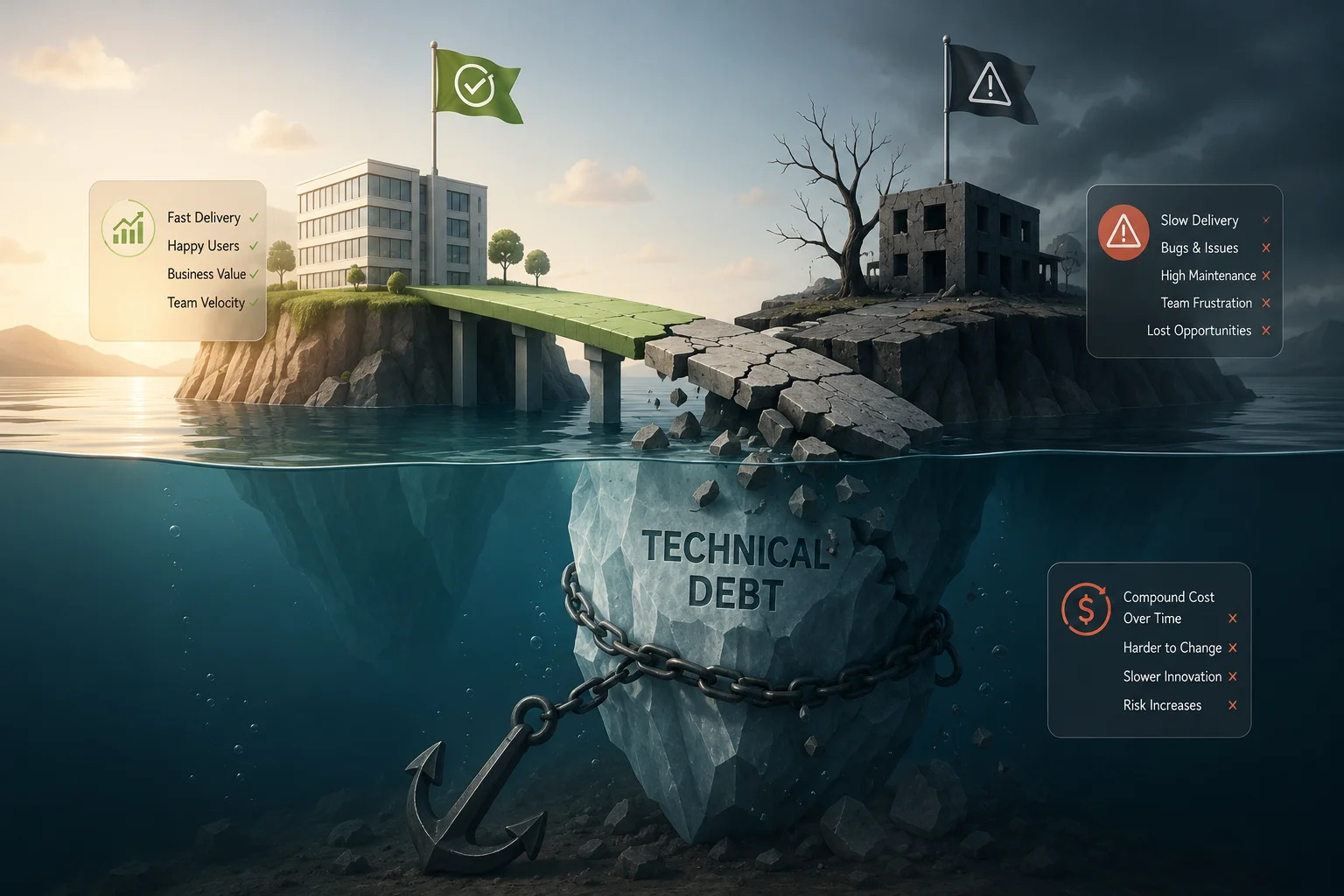
Technical debt is an inevitable part of software development. It represents the future cost of decisions that prioritize short-term delivery over long-term maintainability. While taking on technical debt can sometimes accelerate product development, unmanaged debt gradually reduces engineering productivity, increases operational risk, and makes future changes more difficult.
Not all technical debt is created intentionally. Rapid business growth, changing requirements, outdated dependencies, inconsistent coding standards, and evolving architectures can all contribute to increasing complexity over time. As applications mature, these issues often become more visible through slower development cycles, recurring production problems, and higher maintenance costs.
Managing technical debt begins with visibility. Engineering teams should regularly assess architectural risks, code quality, infrastructure health, and development workflows to identify areas that require improvement. Tracking technical debt alongside product features helps stakeholders understand its impact on delivery speed and long-term business value.
Reducing technical debt does not always require major system rewrites. Incremental refactoring, automated testing, dependency updates, and improved documentation can significantly improve maintainability while minimizing disruption to ongoing product development. Addressing smaller issues continuously is often more effective than postponing improvements until they become critical.
Business and engineering leaders should view technical debt as a strategic consideration rather than a purely technical concern. Balancing new feature development with ongoing platform improvements enables organizations to maintain product quality while continuing to innovate. Open communication between technical and business teams helps ensure that investment decisions reflect both immediate priorities and long-term sustainability.
Technical debt cannot be eliminated entirely, but it can be managed responsibly. Organizations that invest in continuous improvement, sound engineering practices, and thoughtful architectural decisions build software that remains adaptable, reliable, and capable of supporting future business growth.