
Zero Trust Explained
As organizations embrace cloud computing, remote work, and distributed applications, traditional network security models are no longer sufficient. The concept of a trusted internal network has become increasingly difficult to maintain. Zero Trust addresses this challenge by assuming that no user, device, or application should be trusted by default, regardless of its location.
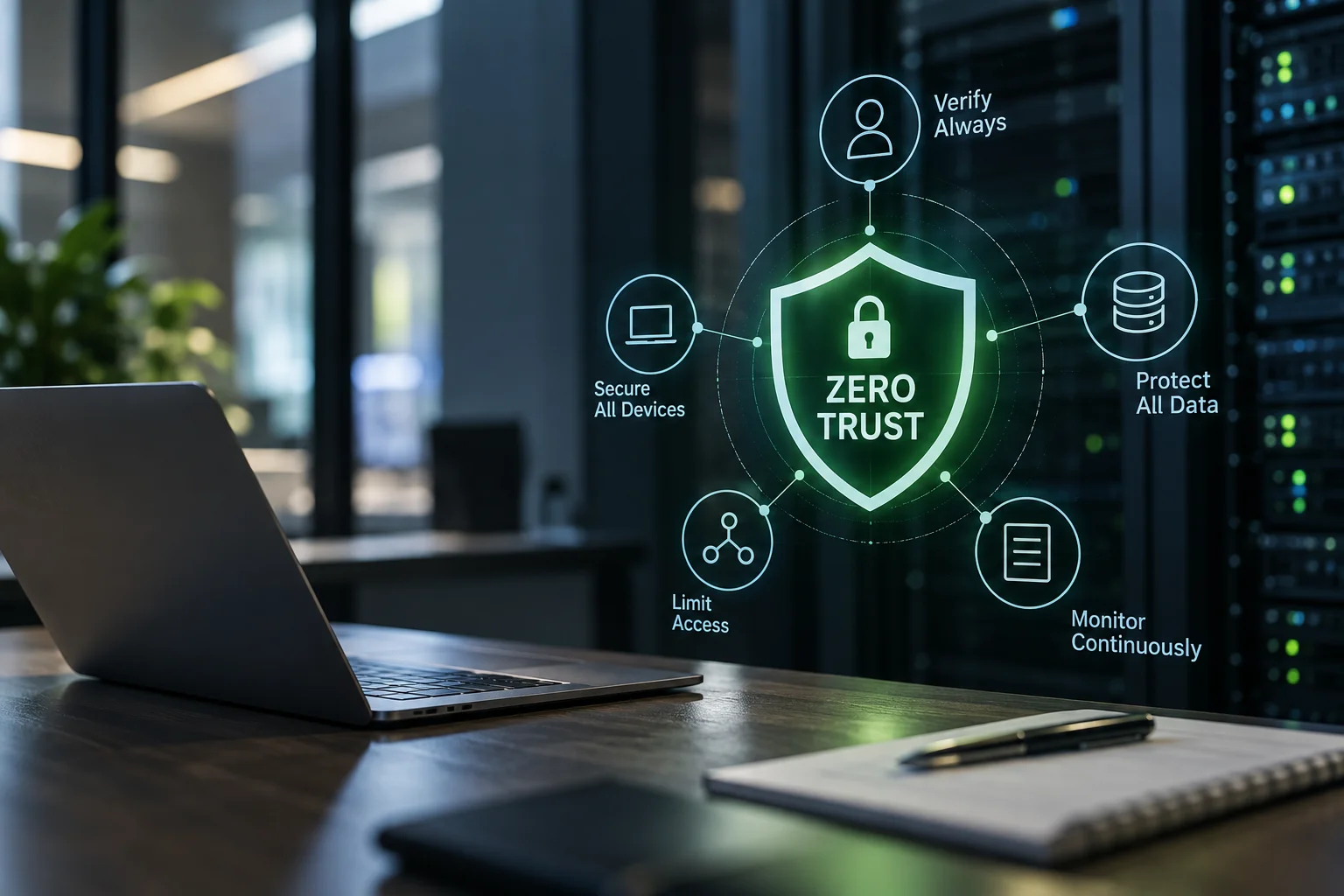
At the core of Zero Trust is the principle of "never trust, always verify." Every request to access systems or data must be authenticated, authorized, and continuously validated. Identity, device health, user behavior, and contextual information all contribute to access decisions, helping organizations reduce the risk of unauthorized access and lateral movement within their environments.
Identity management plays a central role in a Zero Trust architecture. Multi-factor authentication, single sign-on, and least-privilege access help ensure that users only receive the permissions required to perform their responsibilities. Regular access reviews and automated provisioning further reduce security risks as teams and systems evolve.
Zero Trust also extends beyond user authentication. Network segmentation, endpoint protection, application security, and continuous monitoring work together to create multiple layers of defense. Even if one security control is bypassed, additional protections help limit the impact of potential attacks and prevent them from spreading across systems.
Implementing Zero Trust is an ongoing journey rather than a single technology deployment. Organizations should gradually strengthen identity management, improve visibility across their infrastructure, and automate security policies where possible. Integrating Zero Trust principles into everyday engineering and operational practices leads to stronger protection without sacrificing productivity.
As cyber threats continue to evolve, Zero Trust has become a foundational strategy for modern enterprises. By verifying every request and minimizing implicit trust, organizations can better protect critical systems, sensitive data, and business operations in an increasingly connected digital landscape.