
Enclave and Da Nang’s Transformation into Vietnam’s “Next Place”
In May 2008, the San Jose Mercury News published an article examining Da Nang’s transformation from a city long associated with the Vietnam War into an emerging destination for international investment, technology, and software development.
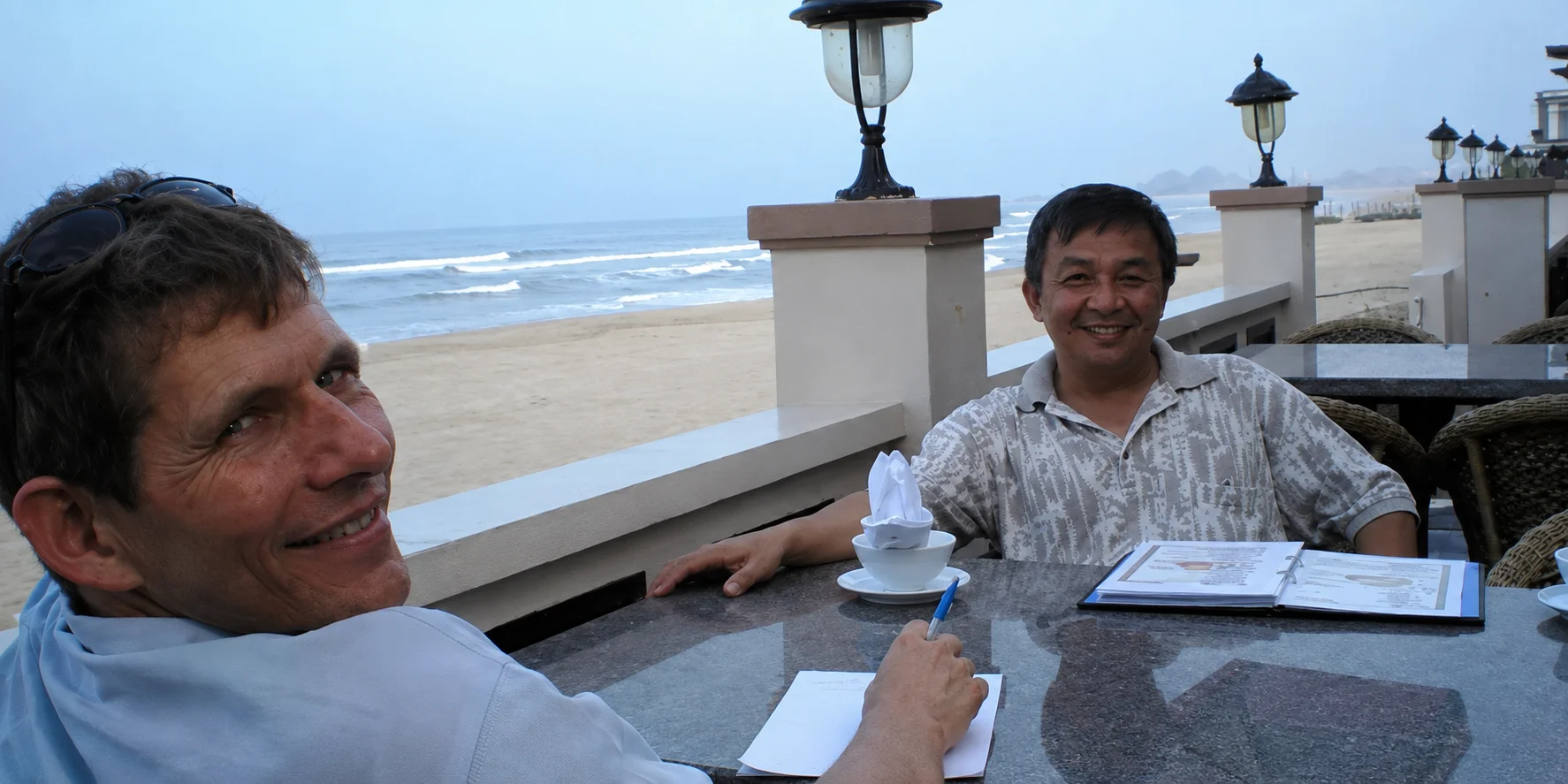
Written by journalist John Boudreau, the article featured Enclave and its founders as part of a new generation of businesses helping shape that transformation. At the time, Enclave had been operating in Da Nang for less than a year, led by former Silicon Valley executives Le H. Hung and Steve Cook. From the company’s new office, they were witnessing a city beginning to redefine its place in Vietnam’s rapidly developing economy.
Choosing Da Nang
Enclave’s decision to establish its software development operations in Da Nang was a deliberate one.
Vietnam’s larger business centers were already attracting considerable international attention, but Da Nang offered a different opportunity. The city combined a growing technical workforce with competitive operating costs, a stable environment, and a local government actively seeking long-term technology investment.
According to the Mercury News, Da Nang’s leaders welcomed Enclave and maintained an open dialogue with its leadership. The city hoped companies such as Enclave could help expand its economy beyond tourism and establish Da Nang as a credible center for software engineering and high-technology services.
For Enclave, the opportunity was not simply to open another offshore development office. It was to build an engineering organization in a city where the company could contribute to the development of both local talent and the wider technology ecosystem.
Investing in Local Engineering Talent
One of the most important reasons Enclave chose Da Nang was its access to young engineering talent.
The Mercury News highlighted Enclave’s relationship with the University of Technology in Da Nang and the company’s early Bootcamp program. Through the program, students could gain practical software development experience while continuing their university education.
This approach helped Enclave identify promising engineers and prepare them for the expectations of international software projects. It also responded to one of the challenges facing Vietnam’s emerging software industry at the time: the gap between academic education and the practical skills required by global clients.
Rather than relying only on the existing labor market, Enclave invested directly in developing its future workforce. Technical training, professional communication, teamwork, and real-world project experience became important parts of the company’s engineering model.
This commitment to education would remain central to Enclave’s development in the years that followed.
Building More Than a Low-Cost Operation
Vietnam was gaining attention in 2008 for its economic growth, young workforce, and increasingly open business environment. Da Nang also offered lower real estate and employment costs than the country’s largest cities. However, Enclave’s vision extended beyond cost advantages.
A sustainable offshore development center requires strong engineering practices, reliable communication, intellectual property protection, and long-term continuity. It also requires engineers who understand the client’s business and can contribute to products over many years.
By establishing dedicated teams in Da Nang, Enclave sought to create an environment where international clients could work closely with Vietnamese engineers while retaining visibility and control over their software development operations.
The goal was not simply to complete assigned tasks. It was to build long-term engineering partnerships.
Recognizing Da Nang’s Potential
The Mercury News article described Da Nang as a city developing quickly but still relatively early in its transformation. New infrastructure, resorts, business developments, and technology investments were beginning to reshape the city.
Steve Cook compared Da Nang at the time to Ho Chi Minh City a decade earlier: a quietly emerging economic center with significant room for growth. Hung Le summarized Enclave’s confidence in the city with a simple observation:
“Da Nang is the next place.”
That statement reflected more than optimism about lower operating costs. It expressed a belief that Da Nang possessed the people, environment, and ambition required to become an important part of Vietnam’s technology industry.
An Early Chapter in Enclave’s Journey
Looking back, the San Jose Mercury News article captured an important early chapter in Enclave’s history.
Enclave was a young company establishing itself in a city that was also beginning a new phase of development. Both were placing a long-term bet on software engineering, education, international collaboration, and the potential of Central Vietnam.
The article also documented the beginning of a relationship between Enclave and Da Nang’s engineering community. What started with an office, a small group of engineers, and a university Bootcamp would grow into a long-term commitment to developing dedicated software teams for international clients.
Da Nang was described in 2008 as Vietnam’s “next place.” For Enclave, it became the place where we could build our engineering culture, develop generations of technology professionals, and establish lasting partnerships between Vietnam and businesses around the world.
Original source: John Boudreau, “Da Nang’s Transformation into Vietnam’s ‘Next Place,’” San Jose Mercury News, May 4, 2008.